Power Curve
999600400
1s15s3m2h5m59s
1s: 999 W2h5m59s: 267 W


Browse
the
grind.

May 26, 5:11 PMGarmin Edge 830Arne
The team time trial.
It is probably the most forgotten discipline in cycling. In professional racing it is disappearing more and more. In amateur racing it barely exists. In the Dutch elite club competition we have one TTT during the season, and then the national club championships at the end of the year. That’s it. Two races. Shame!
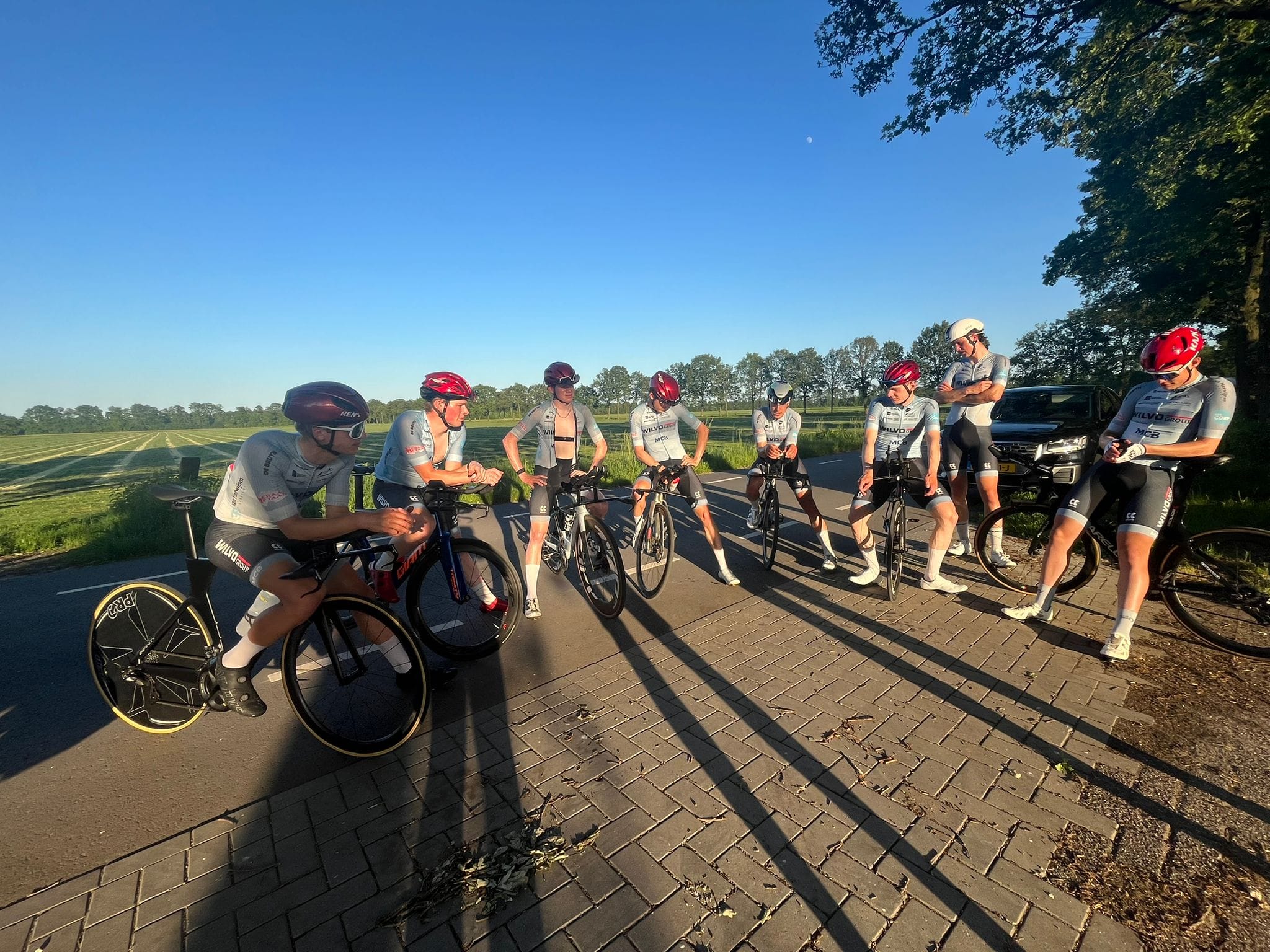
The only real team discipline
Cycling is often called an individual team sport. Which is a perfect description in my opinion. Most of the time one rider wins, and everyone else has done some version of helping, chasing, blocking, fetching bottles, or sacrificing themselves for the greater good. Nice, but still: one guy crosses the line with his arms in the air.
The team time trial is different. It is probably the only discipline where the result genuinely belongs to the group. If one rider messes it up, everyone feels it immediately. Everything depends on coordination, trust and communication.
And speed. A lot of speed. Everyone is in full aero position, centimetres apart, rotating through at full gas. Nobody talks normally because you physically cannot. The only communication is shouting.
And the harder it gets, the louder everyone starts shouting.
TTT 101
For people who have never ridden one, the idea is simple. You ride in a rotating paceline. One rider takes a pull on the front, fully in the wind, then swings off and drops back into the line. Everyone behind gets the draft and tries to recover just enough before it is their turn again. Sounds easy. But is not that easy.
A good TTT looks smooth from the outside, but inside the line it feels violent and chaotic. Every pull is above threshold. Then you come off, try not to explode, try not to lose the wheel, and hope your breathing returns to something that resembles normal before you are back at the front again.
There are also all these tiny details that sound ridiculous until you actually do it. You cannot flick your elbow to signal your pull is done, because your elbows are locked into the extensions. So you flick your knee outward before pulling off. You need to drop off to the right side or you will sweep the front wheel of the rider behind you. When someone swings off and drops back, the riders passing him often sit slightly more upright to give him a bit of extra shelter. Tiny detail. Big difference. If you are cooked in the back, you need to communicate that the person dropping off takes the place in front of you.
You are not going to explain this during the ride. All communication patterns are discussed and practiced before. A good TTT is basically a collection of small acts of cooperation performed at 50+ km/h while everyone is slowly dying.
What I love most are the details that only make sense once you are in it.
The rotation changes with the wind. But the funny thing is: the rider on the front does not really feel where the wind is coming from anymore: is it full on headwind, bit from the left or a bit from the right? So the riders behind start shouting.
“LEFT!”
“RIGHT!”
And then the whole line has to shift across the road to stay sheltered.
After corners, everyone yells to ease off slightly, because the first rider can accelerate much harder than the last rider. If the front guy sprints out of the corner like an idiot, the back of the line just snaps.
When someone gets dropped, the whole system changes again. Suddenly there is one fewer rider in the rotation. The dropped rider should shout that he is last wheel before fully swinging off, otherwise everyone behind expects a wheel that is no longer there. Everything happens at once. Wind direction. Corners. Rotation. Gaps. Shouting. Suffering. If it works, it feels amazing.
The perfect suffering
The power file after a TTT is great to analyse. You can see the repetitive pulls. Pull. recovery, sprinting from the corner, recovery, pull. Again. Basically the perfect lactate shuttle on earth.
And the cruel part is that your pull is not finished when you leave the front. Your pull is only finished when you survive dropping back through the line and manage to get onto the final wheel again.
That is often the hardest part.
By the end there are usually fewer riders left. Maybe six guys. Completely empty. Still rotating somehow. Nobody has anything left, but the line keeps moving. A team time trial is never perfect. It is about getting a close as possible to perfect. It definitely deserves more in cycling.
Comments
No comments yet.
Sign in to comment.
0 comments